Friday, 25 April 2025

Chhattisgarh, a state rich in tribal heritage and folk traditions, reflects its vibrant culture through colorful, comfortable, and symbolic clothing. The dressing style is deeply rooted in its environment, social customs, and festivals.

🧡 Traditional Dress of Chhattisgarh – Complete Details


πŸ‘©‍🦰 Women’s Traditional Attire

πŸ”Έ Lehenga-Choli

  • Lehenga: A long, flowing, often pleated skirt made from cotton or silk.

  • Choli: A fitted blouse that may have elaborate embroidery or mirror work.

  • Dupatta or Odhni: A matching or contrasting scarf draped over the shoulder or head.

πŸ”Έ Lugda (Sari Variant)

  • Many tribal women wear a Lugda, a type of sari, often with bright borders and block prints.

  • The Kachhora style of draping is common among tribal women, where the saree is tucked between the legs for ease of work.

πŸ”Έ Colors & Fabrics

  • Bright shades like red, yellow, blue, and green dominate.

  • Cotton for daily use; silk and linen for festivals.

  • Locally woven textiles like Kosa silk and Chanderi are highly prized.

πŸ‘¨‍🦰 Men’s Traditional Attire

πŸ”Έ Dhoti

  • A long, unstitched piece of cloth wrapped around the waist and legs.

  • Often white or off-white, worn in a simple style.

πŸ”Έ Kurta

  • A loose, knee-length tunic usually made of cotton.

  • May be plain for daily wear or embroidered for festive occasions.

πŸ”Έ Headgear

  • Turbans or Pagri in various colors are worn, especially during festivals or by elders.

  • Some tribes also use bamboo or palm-leaf hats in rural areas.

πŸ’ Accessories and Ornaments

For Women:

  • Necklaces, bangles, earrings, and anklets, often made from:

    • Silver, copper, beads, or shells.

  • Tribal tattoos and nose rings (nath) are common, especially in interior regions.

  • Bindi and kumkum are worn on the forehead.

For Men:

  • Beaded necklaces and metal bracelets are sometimes worn by tribal groups.

  • Men may also carry bamboo baskets or cloth bags slung across their shoulders.

🎭 Tribal & Festive Variations

Chhattisgarh has over 40 tribes, each with unique clothing styles. Notable groups include:

  • Gond: Women wear knee-length sarees and multiple necklaces & bangles.

  • Baiga: Known for their tattoos and jewelry, they wear simple cotton fabrics.

  • Maria and Muria: Use body paint and traditional masks during dances.

During festivals like Bastar Dussehra, Goncha Festival, or Navakhana, both men and women dress in heavily decorated outfits, showcasing:

  • Feathered headgear

  • Beaded ornaments

  • Painted wooden accessories

  • Dancing bells and anklets

🧢 Textiles & Weaving

  • Kosa Silk: A luxury silk made from silkworms, native to Chhattisgarh. Durable and shiny, it is used for sarees and turbans.

  • Tussar & Mulberry silk: Popular for festive saris.

  • Handloom cotton: Widely used for dhotis, kurtas, and everyday saris.

πŸ§‘‍🎨 Modern Adaptation

  • In urban areas, people wear modern clothing but often incorporate traditional fabrics and jewelry during celebrations.

  • Designers also experiment with Kosa silk in contemporary cuts like jackets, dresses, or scarves.

Would you like visuals or a regional comparison with other Indian states’ attires?


"This Content Sponsored by Buymote Shopping app

BuyMote E-Shopping Application is One of the Online Shopping App

Now Available on Play Store & App Store (Buymote E-Shopping)

Click Below Link and Install Application: https://buymote.shop/links/0f5993744a9213079a6b53e8

Sponsor Content: #buymote #buymoteeshopping #buymoteonline #buymoteshopping #buymoteapplication"


Sunday, 20 April 2025

MY FEEDBACK


SBO is online money earning platform


#SBO #SBOTVM #SBOGROUP #BUYMOTE #EDUQUEST #SBOFAKE #SBOSCAM #SBOFRAUD #SBOCHEATING #SBODIGITALMARKETING

Buymote:https://play.google.com/store/apps/details?id=com.Buymote.buymas&pcampaignid=web_share

Eduquest :https://eduquest.courses/

Saturday, 19 April 2025

Bihar is known for its traditional clothing that is both simple and elegant. The traditional dress for women is the Saree, which is draped around the body and worn with a blouse and petticoat. Men wear the Dhoti and Kurta, which is a long tunic worn over the Dhoti.


πŸ‘— Traditional Clothing of Bihar

πŸ‘©‍🦰 For Women: Saree

  • Saree is the staple traditional attire for Bihari women.

  • Draped in various styles, often in the Seedha Pallu style (pallu comes over the right shoulder).

  • Worn with a blouse (choli) and an underskirt (petticoat).

  • Common fabrics: Cotton, Tussar silk, Bhagalpuri silk (very famous from Bhagalpur region).

  • Designs & Patterns:

    • Traditional motifs, floral patterns, temple borders.

    • Often paired with simple gold jewelry or silver tribal-style ornaments.

  • During festivals and weddings, women wear brightly colored sarees with rich embroidery and zari work.

πŸ‘¨‍🦱 For Men: Dhoti & Kurta

  • Dhoti: A rectangular piece of cloth, usually white or off-white, wrapped around the waist and legs.

  • Kurta: A long tunic-like shirt worn over the dhoti.

  • The look is often completed with a gamchha (traditional cotton towel/scarf).

  • On special occasions, men might wear:

    • Sherwani or Churidar Kurta

    • Angavastram (a stole-like cloth worn over the shoulders)

🧡 Special Mentions

  • Bhagalpuri Silk (Tussar Silk): Known as the "Queen of all fabrics", it's world-famous for its texture and elegance. Often used in sarees and scarves.

  • Paag: A traditional headgear worn in Mithila region of Bihar, symbolizing respect and honor.

  • Madhubani Dupattas/Sarees: Sarees or fabrics painted with Madhubani art, an ancient folk art of the Mithila region.

πŸŽ‰ When Worn

  • Daily Wear: Lightweight cotton sarees or dhoti-kurta.

  • Festivals & Weddings: Bright, embroidered or silk sarees, and more ornate versions of the dhoti-kurta or sherwanis.

Would you like images of traditional Bihari clothing or want to explore how these outfits are styled today in a modern context?

"This Content Sponsored by Buymote Shopping app

BuyMote E-Shopping Application is One of the Online Shopping App

Now Available on Play Store & App Store (Buymote E-Shopping)

Click Below Link and Install Application: https://buymote.shop/links/0f5993744a9213079a6b53e8

Sponsor Content: #buymote #buymoteeshopping #buymoteonline #buymoteshopping #buymoteapplication"

Saturday, 12 April 2025

Assam, one of the North Eastern states comes with its characteristic scenic beauty and serenity. The verdant green forests and the mist-clad hill slopes of Assam pull tourists from far and wide. Another aspect that defines the state is its deep cultural roots. The culture and traditions that the state is gifted with are mirrored through the costumes that the locals wear. The traditional dresses of Assam speak of a rich cultural heritage handed over to progeny by the ancestors. The natives of the state are doing their best in carrying the flame ahead. Fantastic motifs and mind-blowing threadwork on the rich fabrics make Assamese attires stand out. If you wish to learn more about the traditional dress of Assam, read the article below:

Traditional Dress of Assam


Assamese Men’s Attire

Dhoti & Gamosa
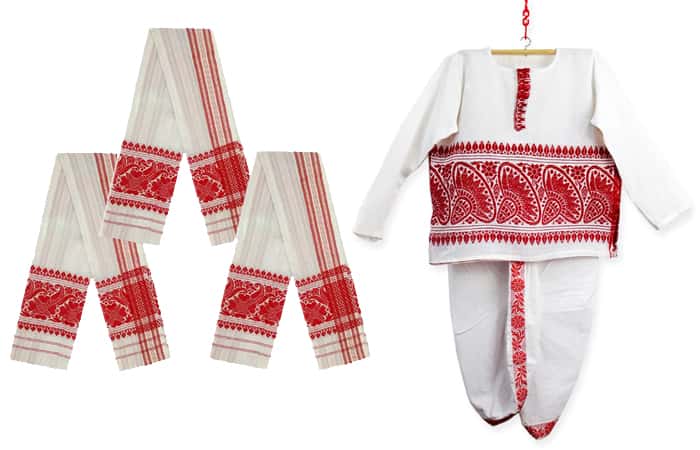
Dhoti and Gamosa

Dhoti and Gamosa go hand in hand to complete the traditional look of an Assamese man. The two jointly represent the indigenous handloom craft of Assam. The dhoti is worn in a typical manner to clad the lower portion of one’s body while the Gamosa is used on the upper body. The dhotis are tied around the waist and are 5 yards in length. Dhoti’s one end is made to pass between a man’s legs and is tucked smartly inside his waistband. We all know about ‘dhotis’ as they make an integral part of the Indian culture while ‘Gamosas’ make a vital part of the Assamese culture. Gamosa is a rectangular white cloth bordered red on its three sides. The fourth side of the Gamosa comes with attractive woven motifs. In Assam, Gamosas stand as a symbol of honor. So, Gamosas are often gifted to people who have achieved something great and laudable. Gamosas are usually crafted out of cotton yarn but those that are used for festive occasions are crafted out of pat silk. In most cases, the Gamosa is hung around one’s neck but occasionally it might be used as a headgear where men tie it around their heads. Also, the Gamosa is versatile enough to be used as Loincloth during Bihu dance or as a waistcoat called Tongali.

Chola
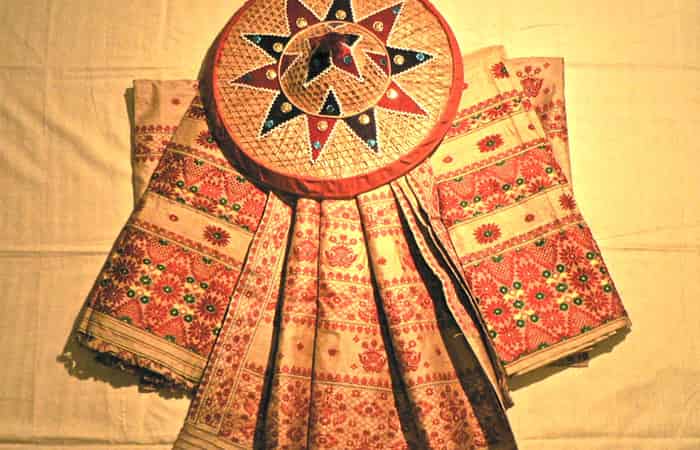
Chola

Chola is a kind of shirt that men wear to cover their upper body. Rudra Singha, the king of Assam state was the one who brought in the concept of shirts. During that time the royals and high officials of the state used to wear Cholas of different colors. The Cholas they wore were called Chapkan and Chauga. Swargadeos, the ruling clan of Assam used to wear various kinds of Cholas like Rupar Bridiya, Chengcola, Buku Chola, and Enga Chola to name a few. The locals still hold on to the tradition of wearing Cholas. But, the Cholas you get to see now are styled in accordance with contemporary fashion.

Assamese Women’s Attire

Mekhela Chador/Sador
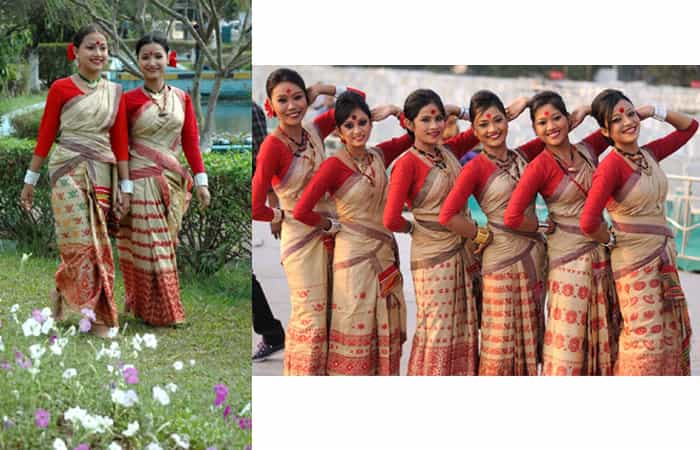
Mekhela Chador

Women of Assam wear the traditional Mekhela Chador on all festive occasions. The garb consists of two cloth pieces-one for the bottom and the other for the upper body. The cloth that is draped to cover the lower body has a cylindrical shape. It is called Mekhela. The Mekhela is draped waist downward and is tucked on the right side of the waist after being folded neatly into crisp pleats. The other piece of cloth is called the Chador/Sador. The chador’s one end is tucked artfully into the upper portion of the Mekhela and another end is used to drape the body’s upper part in a pallu style. This traditional attire apparently looks like a saree but it is actually different. In the recent time, the Mekhela-Chador is paired with a well-fitted blouse. Triangular folds are used to drape the Mekhela-Chador and this is indeed an art that needs to be mastered. Silk is used to craft the Mekhela Chador and there are three major varieties of silk used. Muga silk, Pat silk, and Eri silk are the three varieties of silk used in this attire.

In the past, Riha was used instead of blouse along with the Mekhala Chador. Riha was another piece of unstitched cloth wrapped around the bust. Mekhela-Chador paired with the Riha made the perfect bridal trousseau of an Assamese bride. These days it has been replaced by the blouse.

Sualkuchi, a hamlet nearly 35 kms from the state capital Guwahati is referred to as the Silk Heaven of India as most of the traditional Mekhela Chadors that the state is famous for, are woven here. Artisans residing in this village excel in crafting exceptionally beautiful Mekhela Chadors that are famous worldwide and have a robust global market.

Assam Silk Sarees

Assam Silk Sarees

High-quality silk sarees embellished with authentic cultural motifs have stood the test of time and trends. These sarees come in a vast array of colors and display gorgeous embroideries. Modern women of the state love to flaunt the splendorous silk-saree party look on all special occasions. Assam silk sarees are in high demand all over the world. If you wish to pick some of the best silk sarees of Assam, visit Silkalay, a prominent shopping hub in Guwahati. Assam Silk Emporium is also another place to buy good quality Assam silk sarees.

Tribal Attires of Assam

The culture of Assam represents an intriguing mix of diverse ethnic groups. The state is inhabited by a wide range of tribes each one coming with its typical unique culture. The costumes they wear speak a tenfold about the distinctiveness of each tribal group. Some of the major tribes of Assam are Dimasa, Bodo, Mishing, and Rabha.

Dimasa Tribe Costume
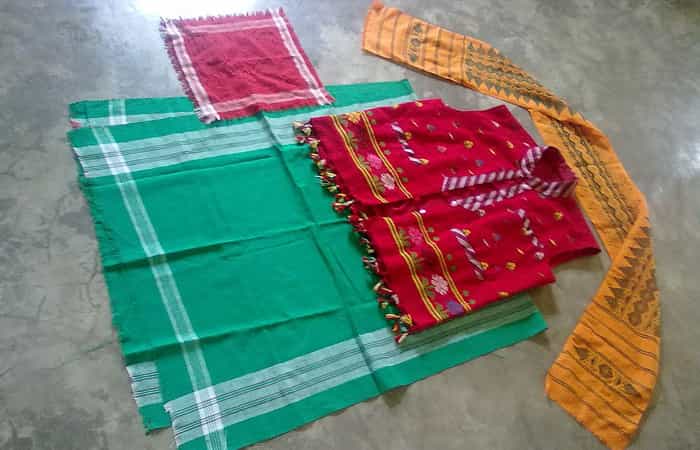
Dimasa Tribe Costume

The Dimasa tribe men take pride in wearing the Sgaopha or Pagri. It is actually a status symbol for the men of this tribe. The Sgaopha is usually yellow or green colored but during weddings, it might be white colored adorned with a red colored thread. They also carry the Rigdo, a type of muffler.

Bodo Tribe Costume

Bodo Tribe Costume

Bodo men tie the Gamosa around their waist and allow the ends to drop down to their knees. For the upper body they use shirts and they use Khoroms for their footwear. Decades back the men of this tribe used to keep their upper body bare but with the changing times, they too are wearing shirts. The women wear the Dokhna. It is dress-type clothing wrapped around the body in a typical fashion. The Dokhna starts from one’s chest and extends downward to reach the ankles. This uniquely crafted clothing cannot be wrapped around a woman’s body more than once and therein lies its uniqueness. Rich colors and patterns define this traditional tribal garb. Salamatha is the bridal attire worn by this tribe.

Mishing Tribe Costume
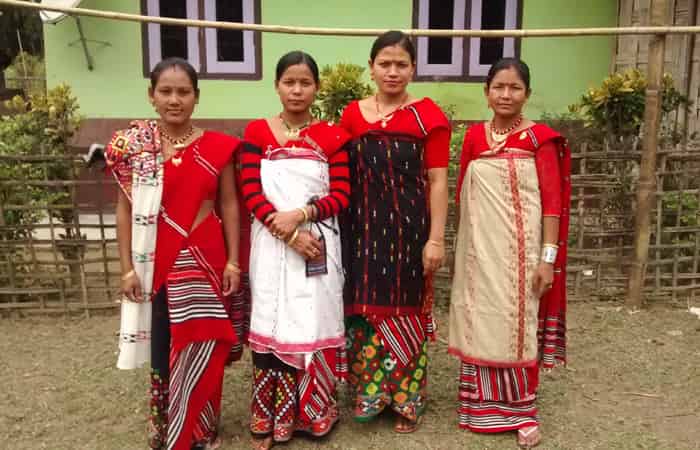
Mishing Tribe Costume

Men of the Mishing tribe wear a dhoti called Gonru Ugon and shirt-type upper-body clothing called Mibu Galuk. They too don’t forget to sport the Gamosa Dumer. Women of this tribe wear a black-hued typical Mekhala Chador known by the name of Yakan Age Gasa’. The blouses they wear are vibrantly colored.

Rabha Tribe Costume

Rabha Tribe Costume

Men of the Rabha tribe follow the typical Assamese dress code of Gamosa and Dhoti but the women exhibit a unique dress sense. The women’s attire comprises of three things- the Koum Kontong (a skirt-styled piece of cloth decked with exquisite motifs), the Kambang (clothing for the upper body), and the Labok (a waistband decked with pearls and shells).

Accessories to Complete the Traditional Look

Paguri
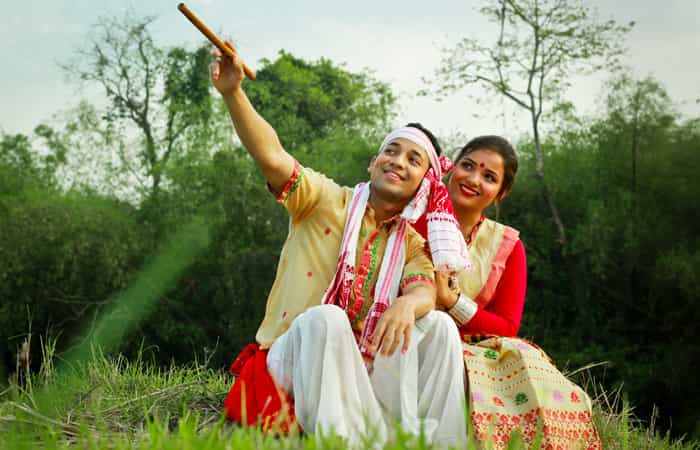
Paguri Costume

Assamese men often accessorize their costume with a turban called ‘Paguri’. It is a kind of headgear also differently referred to as ‘pag’. During the times of Gadadhar Singha, an Ahom king, Phasau, a turban of quite simple design was introduced. Another king, Rudra Singha, brought in a turban style ‘Jama’ which was similar to the turbans worn by Mughal rulers. In the recent times, the locals of the state wear a simple form of turban but those belonging to higher strata in society cover their heads with special turbans that differ from the simple ones in look and form.

Khorom

Khorom

This is a kind of wooden footwear worn by the menfolk. It consists of a knobbed post that comes exactly between the second and the big toe. Khoroms can either be absolutely simple or elaborately decked. Teak wood or ebony is mostly used in making these exotic foot wears.

Jewellery

Jewellery

No attire is complete without the use of Jewellery. Women of Assam make sure to deck themselves up with traditional Assamese jewelry on all special occasions. Shells, pearls, vibrantly colored gemstones, and Minakari are generously used in Assamese Jewellery. The jewelry motifs are largely inspired by Mother Nature and consist of things like animals, birds, and musical instruments. Some of the famous neck ornaments of Assam are Gal Pata, Dholbiri, Jonbiri, Loka-Paro, Kerumuni, and Dug-Dugi. Thurayas are traditional earrings worn by the aged Assamese women. Gam-Kharu is a typical bangle bracelet that Assamese women adorn their wrists with.

So, this is all about traditional Assamese dresses. Even if you are not an Assamese, you can flaunt the traditional look of Assam by adorning yourself with these traditional costumes.


"This Content Sponsored by Buymote Shopping app

BuyMote E-Shopping Application is One of the Online Shopping App

Now Available on Play Store & App Store (Buymote E-Shopping)

Click Below Link and Install Application: https://buymote.shop/links/0f5993744a9213079a6b53e8

Sponsor Content: #buymote #buymoteeshopping #buymoteonline #buymoteshopping #buymoteapplication"


Thursday, 3 April 2025

The traditional clothing of Andhra Pradesh is a blend of heritage, elegance, and vibrant textiles. Whether it’s the graceful sarees for women or the classic dhoti-kurta for men, the attire reflects the cultural richness and craftsmanship of the state.


Traditional Clothing of Andhra Pradesh


Traditional Dress for Women

1️⃣ Saree – The Most Popular Attire

  • Worn by women of all ages, especially for festivals and ceremonies.

  • Made from different fabrics such as cotton, silk, and handloom textiles.

  • The draping style varies across regions, with the Nivi drape being the most common.

2️⃣ Blouse & Petticoat

  • The saree is worn with a matching or contrasting blouse.

  • The petticoat (inner skirt) provides support and comfort for draping the saree.

3️⃣ Popular Sarees of Andhra Pradesh

Pochampally Ikat Saree – Known for its geometric patterns and vibrant colors.
Mangalagiri Saree – Famous for its fine cotton weave and zari border.
Dharmavaram Saree – A rich silk saree similar to Kanchipuram silk, often used in weddings.
Uppada Silk Saree – Lightweight and highly intricate handwoven silk saree.
Gadwal Saree – Known for its silk-cotton blend and rich zari work.

4️⃣ Langa Voni (Half Saree) – Traditional Attire for Young Girls

  • A two-piece outfit consisting of a long skirt (Langa), a short blouse (Choli), and a dupatta (Voni).

  • Worn by young girls and teenagers before transitioning to sarees.

Traditional Dress for Men

1️⃣ Dhoti (Panche)

  • A long piece of cloth wrapped around the waist and tied in a specific style.

  • Usually made of cotton or silk, worn with a golden zari border during festivals.

  • White or off-white dhotis are common, sometimes paired with a gold border for a royal look.

2️⃣ Kurta

  • A long tunic worn over the dhoti.

  • Can be plain or embroidered, depending on the occasion.

  • Paired with an angavastram (a shawl draped over the shoulders).

3️⃣ Sherwani – Wedding & Festive Wear

  • Men wear heavily embroidered Sherwanis for weddings and grand functions.

  • Often paired with a dupatta and churidar pants.

4️⃣ Lungi – Casual Wear

  • A comfortable cotton cloth wrapped around the waist, mostly worn at home or in villages.

Jewelry & Accessories

For Women

Gold jewelry – Necklaces, bangles, earrings, and waistbands (Vaddanam).
Jasmine flowers (Gajra) – Worn in the hair, especially by married women.
Bindi – A red dot or decorative sticker on the forehead.

For Men

Rudraksha Mala or Gold Chains – Worn around the neck.
Traditional Turbans (Pagadi) – Worn during festivals or religious events.

Modern Influence & Contemporary Fashion

  • While traditional attire is still popular for festivals, weddings, and religious occasions, daily wear has become more contemporary.

  • Women often wear salwar kameez, kurtis, or Western attire in urban areas.

  • Men have shifted to pants, shirts, and western suits for professional settings.

Final Thoughts

The traditional clothing of Andhra Pradesh is a blend of heritage, elegance, and vibrant textiles. Whether it’s the graceful sarees for women or the classic dhoti-kurta for men, the attire reflects the cultural richness and craftsmanship of the state.

Would you like recommendations on where to buy authentic Andhra handloom sarees? 😊


"This Content Sponsored by Buymote Shopping app

BuyMote E-Shopping Application is One of the Online Shopping App

Now Available on Play Store & App Store (Buymote E-Shopping)

Click Below Link and Install Application: https://buymote.shop/links/0f5993744a9213079a6b53e8

Sponsor Content: #buymote #buymoteeshopping #buymoteonline #buymoteshopping #buymoteapplication"


Wednesday, 26 March 2025

Arunachal Pradesh, known as the "Land of the Rising Sun," is home to several indigenous tribes, each with its distinctive traditional attire. The clothing styles reflect the cultural diversity, heritage, and the region's cold climate.


Traditional Costumes of Arunachal Pradesh


1. Traditional Attire of Women

Women in Arunachal Pradesh wear a wrap-around skirt and a blouse, often adorned with intricate patterns, beads, and ornaments. The materials used are mostly handwoven wool and cotton due to the cold weather in many regions.

a. Key Elements of Women's Attire

  • ‘Gale’ (Wrap-around Skirt): A finely woven, knee-length or ankle-length skirt with geometric patterns and bright colors.

  • Blouse or Jacket: A fitted or loose upper garment made of cotton or wool, depending on the season.

  • Sashes and Scarves: Women often drape a sash or shawl around their shoulders, sometimes embroidered with tribal motifs.

  • Ornaments: Traditional jewelry includes beaded necklaces, silver earrings, and brass bangles, signifying beauty and social status.

b. Tribe-wise Variations in Women's Attire

  • Adi Tribe: Wear a sleeveless blouse with a Gale and a silver belt.

  • Apatani Tribe: Wear a long Gale, sometimes with a full-sleeved jacket, and heavy bead necklaces.

  • Monpa Tribe: Use woolen garments, including a full-length dress with a thick coat.

2. Traditional Attire of Men

Men's attire in Arunachal Pradesh is simple yet elegant, suited for both daily life and festivals.

a. Key Elements of Men's Attire

  • ‘Bakhi’ (Shirt or Jacket): A long-sleeved woolen or cotton shirt, sometimes with embroidery.

  • ‘Gale’ (Trousers or Lower Garment): A tight-fitting or loose woolen/cotton trouser, sometimes wrapped around like a dhoti.

  • Headgear: Many tribes wear decorative headgear adorned with feathers, beads, or animal hair.

  • Ornaments: Men wear bead necklaces, metal armlets, and sometimes a sword or a knife tucked into their waistbands.

b. Tribe-wise Variations in Men's Attire

  • Nyishi Tribe: Wear a cane helmet with feathers, symbolizing bravery.

  • Tangsa Tribe: Use bright-colored wraps and carry a traditional machete (Dao).

  • Monpa Tribe: Wear thick woolen coats and boots due to the cold climate.

3. Special Accessories & Jewelry

  • Beaded Jewelry: Worn by both men and women, beads symbolize tribal identity and social status.

  • Silver and Brass Ornaments: Used in earrings, necklaces, and belts.

  • Animal Motifs & Feathers: Commonly used in headgear and ceremonial attire.

4. Influence of Festivals & Ceremonies

During festivals like Losar, Nyokum, and Solung, people wear their best traditional outfits, often with elaborate embroidery, jewelry, and symbolic patterns.

Conclusion

The traditional costumes of Arunachal Pradesh reflect the rich heritage and diversity of its tribes. Whether it’s the Gale and Bakhi for men or the wrap-around skirts for women, these attires are a blend of culture, craftsmanship, and functionality.

Would you like information on specific tribal attire or where to buy authentic Arunachali clothing? 😊


"This Content Sponsored by Buymote Shopping app

BuyMote E-Shopping Application is One of the Online Shopping App

Now Available on Play Store & App Store (Buymote E-Shopping)

Click Below Link and Install Application: https://buymote.shop/links/0f5993744a9213079a6b53e8

Sponsor Content: #buymote #buymoteeshopping #buymoteonline #buymoteshopping #buymoteapplication"

Thursday, 20 March 2025

India is a land of diverse cultures, languages, and traditions, reflected in its unique clothing styles. Each state has its distinct traditional attire, influenced by history, climate, and cultural heritage.


Traditional Costumes of Different Indian States


πŸ“ Andhra Pradesh: A Blend of Elegance and Tradition

Andhra Pradesh, a state known for its rich cultural heritage and vibrant traditions, has unique traditional costumes for both men and women. The state's attire reflects the region’s artistic craftsmanship, weaving techniques, and love for bright, elegant designs.

πŸ‘© Women’s Traditional Attire: Vibrant Andhra Sarees

The Saree is the most popular traditional dress for women in Andhra Pradesh. It is worn in various styles, showcasing the richness of handloom weaving and embroidery.

🧡 Types of Sarees Popular in Andhra Pradesh

  1. Pochampally Ikat Sarees – Famous for their geometric patterns created using the Ikat dyeing technique.
  2. Mangalgiri Cotton Sarees – Known for their fine cotton fabric, durability, and lightweight texture.
  3. Uppada Silk Sarees – Made with intricate designs and gold or silver zari work, ideal for weddings and special occasions.
  4. Gadwal Sarees – Unique for their lightweight body and heavy zari border, a favorite among brides.
  5. Venkatagiri Sarees – Made from fine cotton with gold zari borders, perfect for daily wear and festive occasions.

πŸ‘š Blouse and Accessories

  • The Saree is paired with a well-fitted blouse (locally called ‘Ravike’).
  • Traditional jewelry such as gold necklaces, bangles, earrings, and waistbands (Vaddanam) are worn, especially during festivals and weddings.
  • Women also adorn their hair with jasmine flowers (Moggu Puvvu), adding to their traditional look.

πŸ‘§ Young Girls’ Attire: Langa Voni (Half Saree)

  • Young girls and teenage girls wear Langa Voni, also known as Pavadai Davani, which consists of:
    • Langa (Skirt) – A long flared skirt.
    • Voni (Dupatta or Shawl) – Draped over the shoulder like a saree.
    • Blouse (Choli) – A fitted top.
  • Langa Voni is typically worn during festivals, temple visits, and coming-of-age ceremonies (Ritu Kala Samskaram).

πŸ‘¨ Men’s Traditional Attire: Dhoti and Kurta

The traditional dress for men in Andhra Pradesh is simple yet elegant.

🩳 Dhoti (Panchalu or Pancha)

  • A rectangular piece of white or cream-colored cloth wrapped around the waist and tied securely.
  • Worn daily by elderly men and during special occasions by younger men.
  • It can be plain or have a golden zari border (especially for weddings and religious ceremonies).

πŸ‘• Kurta and Shirt

  • Kurta – A long tunic, often paired with the Dhoti for a complete ethnic look.
  • Cotton shirts are also commonly worn with Dhotis.

πŸ‘‘ Traditional Accessories for Men

  • Angavastram – A shawl draped over the shoulders, especially worn during religious rituals.
  • Turban (Pagri) – Some rural men and priests wear a turban or headgear for special occasions.
  • Jewelry – Gold rings and rudraksha malas are often worn by men as part of their traditional look.

πŸ›️ Festive and Wedding Attire

🎊 Women’s Festive and Bridal Wear

  • Brides wear heavy silk sarees like Kanchipuram and Uppada Pattu, along with gold jewelry, nose rings (Mukkuththi), and waistbands (Vaddanam).
  • Married women also wear mangal sutra (Mangalyam), glass bangles, and sindoor (Kumkum) on their forehead as symbols of their marital status.

πŸŽ‰ Men’s Wedding Attire

  • Grooms wear a white or cream-colored silk Dhoti with a gold border, paired with an embroidered Kurta or Sherwani.
  • Some also wear gold chains, angavastram, and headgear (Pagri) for a royal look.

🌿 Influence of Handloom and Weaving Culture in Andhra Pradesh

  • Andhra Pradesh is famous for its handloom industry, especially in towns like Mangalagiri, Uppada, Venkatagiri, and Dharmavaram.
  • Weaving communities like the Padmasali and Devanga have preserved traditional weaving techniques for generations.
  • The government promotes Handloom Sarees through initiatives like Andhra Pradesh Handloom Weavers’ Cooperative Society (APCO).

🌟 Conclusion

The traditional costumes of Andhra Pradesh represent the grandeur of its culture, craftsmanship, and history. While modern influences have led to changes in daily wear, Sarees, Dhotis, and ethnic attire continue to be an integral part of the state’s traditions, especially during festivals, weddings, and religious ceremonies.

From the elegance of Andhra Sarees to the simplicity of Dhoti-Kurta, the state’s traditional clothing is a reflection of its deep-rooted heritage. πŸ’›

"This Content Sponsored by Buymote Shopping app

BuyMote E-Shopping Application is One of the Online Shopping App

Now Available on Play Store & App Store (Buymote E-Shopping)

Click Below Link and Install Application: https://buymote.shop/links/0f5993744a9213079a6b53e8

Sponsor Content: #buymote #buymoteeshopping #buymoteonline #buymoteshopping #buymoteapplication"